

Your Guide to a Successful Nairobi Plumbing Inspection
The dream of owning or developing property in Kenya’s vibrant capital comes with a crucial final hurdle: securing the necessary compliance certificates. While building permits cover the structure, the final Nairobi Plumbing Inspection ensures the safety, hygiene, and long-term functionality of your water and drainage systems. This isn’t merely a formality; it’s a vital safeguard for public health, environmental protection, and the structural integrity of your investment.
For many homeowners, landlords, and developers, navigating the official plumbing inspection process, overseen by the Nairobi City County government and often involving the Nairobi Water & Sewerage Company (NCWSC), remains a confusing black box. What documents do you need? What specific pipes, fittings, and manholes will the inspector scrutinize? And what happens if you fail?
This comprehensive guide, brought to you by Winstar Hardware – your trusted partner for quality plumbing materials in Kenya – demystifies the entire compliance journey. We break down the administrative prerequisites and the technical aspects of what inspectors look for, helping you pass your Nairobi Plumbing Inspection the first time and secure that crucial final sign-off without costly delays.
Why the Nairobi Plumbing Inspection is Non-Negotiable: Safety, Legality, and Investment Protection
Before diving into the “how,” it’s crucial to understand the “why.” A proper Nairobi Plumbing Inspection isn’t just about ticking a box; it’s about protecting lives, upholding the law, and safeguarding your financial future.
Public Health and Safety
Faulty plumbing can lead to severe health hazards. Cross-contamination between potable water and sewage, inadequate waste disposal, and the proliferation of disease-carrying pests are all risks associated with non-compliant installations. The inspection ensures your system poses no threat to occupants or the wider community.
Legal Compliance and Occupation Certificates
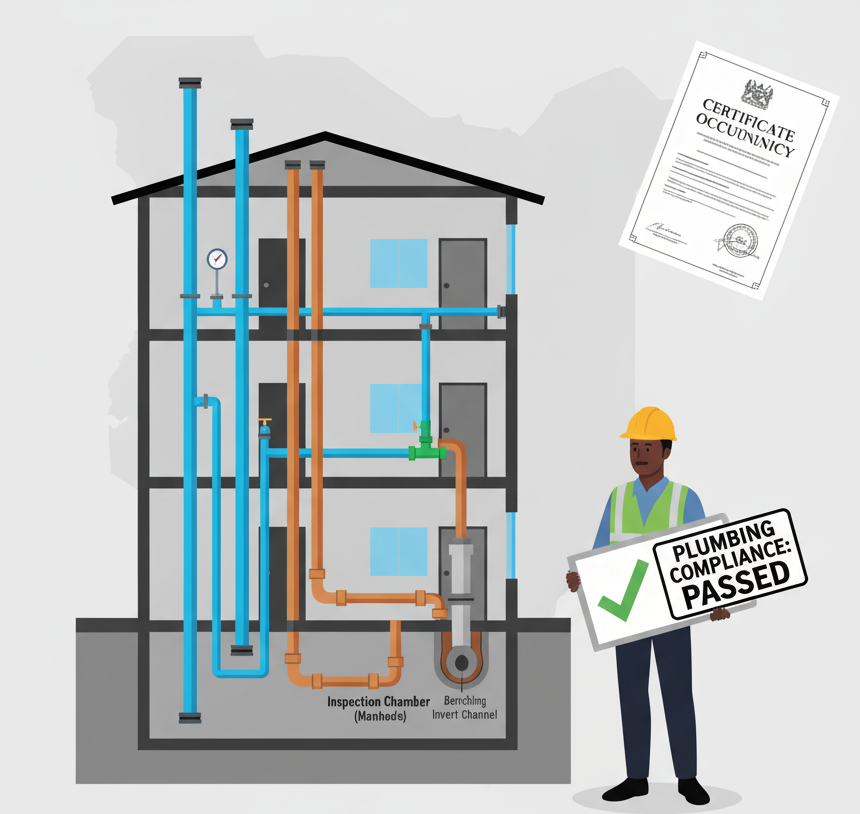
For any new construction or significant renovation, passing the final Nairobi Plumbing Inspection is a mandatory step towards obtaining an Occupation Certificate. Without this certificate, your building is technically unfit for habitation, rendering it illegal to occupy or lease out. This can lead to hefty fines, legal disputes, and significantly devalue your property.
Protecting Your Investment
Consider the costs of rectifying a hidden, non-compliant plumbing issue after walls are closed or tenants have moved in. Structural damage from leaks, mold growth, and the expense of breaking open finished work to correct a faulty pipe can quickly escalate into hundreds of thousands of shillings. A thorough inspection prevents these costly future repairs, ensuring the longevity and value of your property.
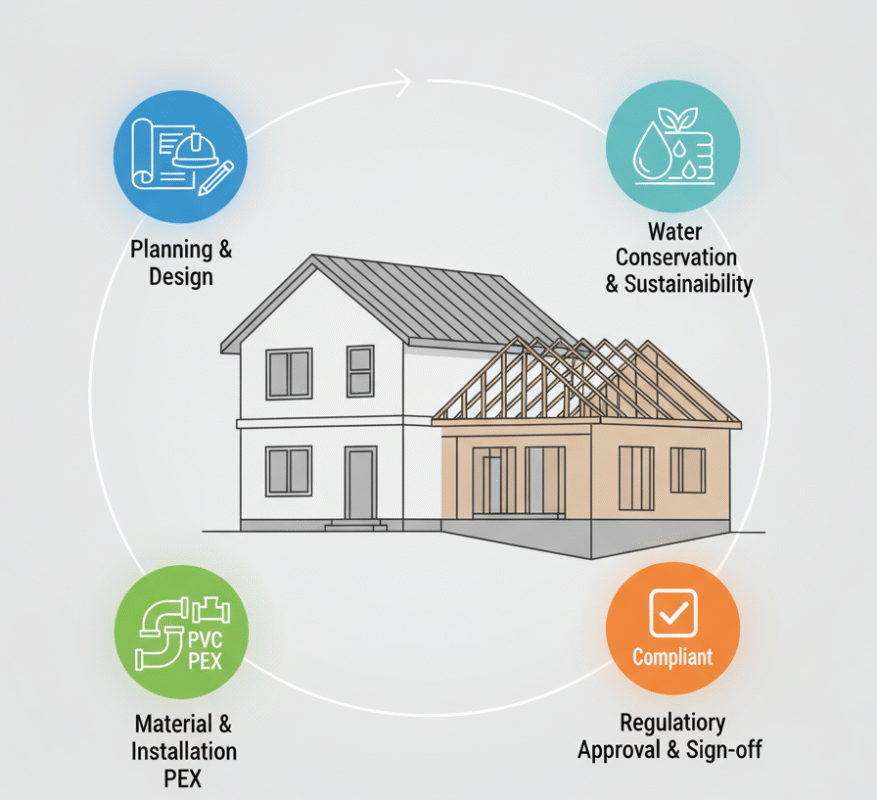
1st Phase: The Administrative Prerequisites – Getting Your Papers in Order
Before any inspector sets foot on your site for the Nairobi Plumbing Inspection, you must have the correct documentation in place. This often intertwines with the broader building approval process.
The Sanitary Permit: Your Foundation
The primary document for plumbing works is typically the Sanitary Permit. While sometimes a standalone permit, it is often an integral part of the larger Building Permit application submitted through the e-Development Portal managed by the Nairobi City County government.
Who Applies:
Generally, a registered professional (e.g., the project architect or structural engineer) submits these plans, often in collaboration with a licensed plumber or drainage engineer.
Key Requirements for Application:
- Approved Architectural Plans.
- Approved Structural Plans.Detailed Plumbing and Drainage Layouts (showing pipe sizes, slopes, fixture locations, manholes, septic tanks, and connections to public sewers).Sewer Connection Application/Approval: Evidence of a valid application or approval from the Nairobi Water & Sewerage Company (NCWSC) for connection to the public sewer system, or an approved plan for an on-site wastewater treatment system (e.g., septic tank and soakaway).
- Payment of relevant fees.
The Importance of Licensed Professionals
The Nairobi City County bylaws stipulate that all plumbing and drainage works must be designed and executed by registered and licensed plumbers or drainage engineers. The inspector will verify that the professionals involved in your project hold current licenses from relevant bodies (e.g., National Construction Authority – NCA for contractors, or relevant professional boards for engineers). Winstar Hardware always recommends engaging only fully licensed professionals.
2nd Phase: What the Inspector Checks – The Technical Walkthrough
The Nairobi Plumbing Inspection is not a single event but a methodical examination conducted by a County Building/Sewerage Inspector, often at two or more critical stages of construction. The authorities designed this phased approach to catch fatal errors while professionals can still correct them without major structural demolition.. Success depends on the quality of workmanship and the strict adherence to the Nairobi City County Building Code and approved sanitary plans.
Drainage Systems: Ensuring Efficient Waste and Sewage Disposal
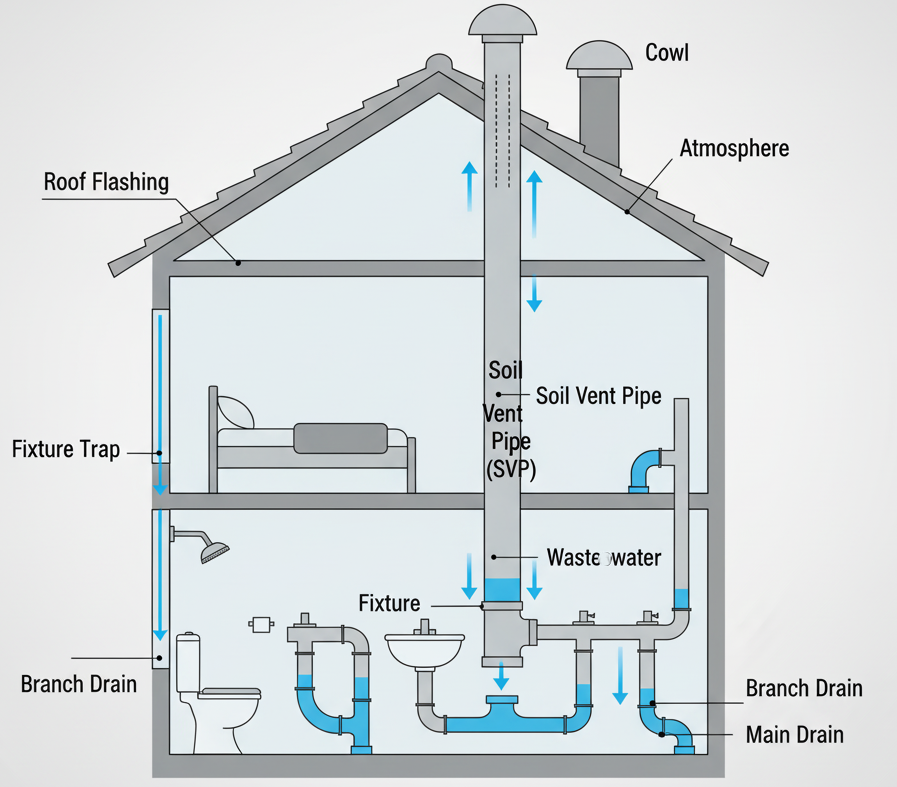
This inspection focuses on the DWV (Drainage, Waste, and Vent) system, which is paramount for hygiene and structural safety. Errors here can lead to toxic sewer gas leaks and sewage back-ups.
1. The Rough-In Inspection (Before Pipes are Covered)
This is the most critical stage for drainage compliance. The inspector verifies the following key points while the system remains exposed in trenches, floors, and walls.:
| Inspection Point | Compliance Standard (Nairobi Context) | Winstar Recommendation |
| Pipe Material & Joints | PVC pipes (typically UPVC) must be KEBS-approved for sewage/drainage. Joints must be cemented correctly and watertight. | Use high-quality, specified PVC drainage pipes. Ensure the plumber uses the correct solvent cement and curing time. |
| Uniform Slope (Gradient) | The fall must be consistent and adequate for “self-cleansing velocity.” Typically, this is 601 to 801 depending on pipe diameter and local code. Insufficient slope causes blockages; excessive slope can cause solids to stall. | Plumbers must use a spirit level or laser level on every section. This is a common failure point in the Nairobi Drainage Inspection. |
| Pipe Support & Embedment | Pipes laid underground must rest on a firm, uniform bed (not on rocks or debris). Pipes in walls or ceilings must be properly clipped and supported to prevent sagging or displacement. | Use the correct pipe saddles and hangers. For underground work, ensure proper bedding material is used before backfilling. |
| The Water Test (Hydrostatic Test) | This is the official compliance test. The system is temporarily sealed (e.g., at the manhole connection) and filled with water to a specific head (height). The water level must hold steady for the period specified by the inspector, typically one to two hours. | Never skip this test. It proves the system is watertight and leak-free. |
2. Manholes and Inspection Chambers (ICs)
Inspectors rigorously check Manhole Construction Standards Nairobi because these chambers provide the primary points of access for maintenance and connection..
- Location: Chambers must be installed at every major change in direction, change in pipe diameter, or where a branch drain joins the main drain.
- Construction Quality: Walls must be watertight (often concrete or masonry plastered internally).
- Benching and Invert: The internal concrete base must be sloped (benched) toward the main channel (invert), ensuring a smooth flow transition without sharp corners where solids can accumulate. The inspector checks that the invert channel is correctly formed and aligned.
- Covers: Covers must be heavy-duty and securely sealed, especially in driveways or public areas.
3. Venting Systems (The DWV Stack)
Proper Plumbing Venting Requirements Kenya are essential to prevent the siphonage of water seals from fixture traps.
- Vent Pipe Termination: The main soil vent pipe (SVP) must terminate at least 900mm (or the height specified in the approved plans) above the highest window or opening and must be fitted with an approved terminal (e.g., a cowl) to prevent debris ingress.
- Venting Connections: All branch drains must be adequately ventilated, preventing air pressure fluctuations when a toilet is flushed or a large volume of water enters the system.
Water Supply Systems: Ensuring Pressure, Integrity, and Safety
The water supply inspection focuses on the integrity of the pressure piping, ensuring no leaks occur and that potable water is protected.
1. Pipe Material and Installation
- Compliance: For pressurized systems, the use of quality, certified PPR pipes and fittings (Polypropylene Random Copolymer) is common due to its heat and pressure resilience. Galvanized steel or copper pipes must meet all required standards if professionals choose to use them.
- Joint Integrity: For PPR, the fusion welds must be clean, correctly fused (no burnt plastic), and free of internal constrictions that impede flow. The inspector will check if the plumber followed the correct fusion temperature and time.
- Isolation Valves: Stop-taps and isolation valves must be strategically installed: at the main supply entry, before any main branch line, and immediately preceding major appliances or water heaters.
2. The Pressure Test
This is the key test for the water supply lines.
| Test Element | Requirement/Procedure (Kenya Standards) | Rationale |
| Required Pressure | Typically, the system is pressurized to 1.5 times the maximum expected working pressure, often between 6 bar and 10 bar (depending on the system design and pipe rating). | Proves that all pipe walls, fusion joints, and threaded connections can withstand future operational stress without bursting or leaking. |
| Duration | The pressure must be held steady (with no more than a marginal, acceptable drop due to temperature changes) for a minimum of 30 minutes to an hour. | A pressure drop indicates a leak, which the plumber must find and repair before covering the pipes. |
| Gauge Location | The pressure gauge must be visible and calibrated. | Ensures accurate reading during the Nairobi Plumbing Inspection. |
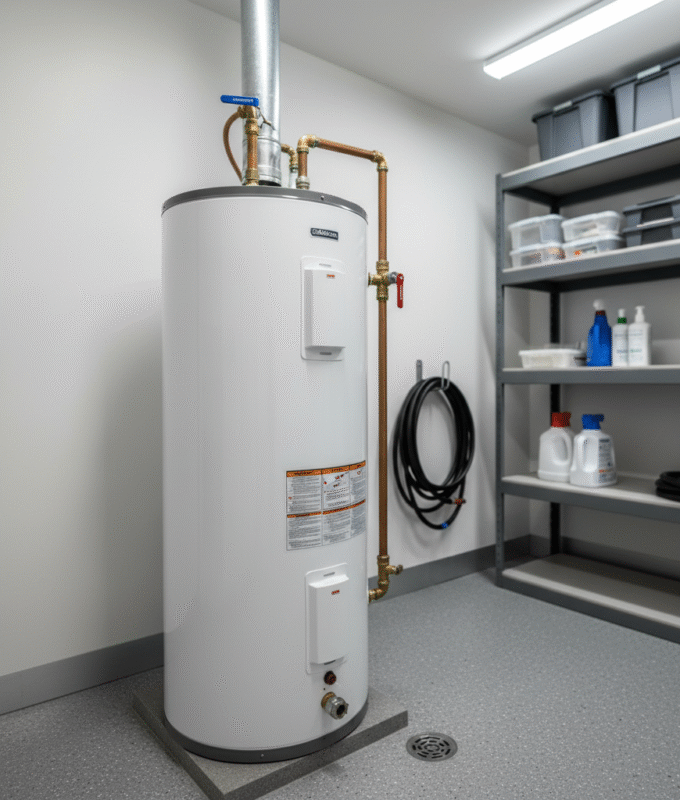
3. Water Heater (Geyser) Safety
Inspection of the water heater is vital for safety, as these systems operate under pressure and high temperature.
- Pressure Relief Valve (PRV): The inspector checks that the PRV is correctly rated for the geyser and installed.
- Drip Tray and Drainage: All roof-mounted or ceiling-mounted geysers must sit in a properly installed metal or plastic drip tray with a drain line leading safely to the outside of the building. This prevents catastrophic ceiling collapse in case of a geyser burst.
- Electrical Bonding: Proper earthing and electrical connection safety.
Fixtures and Final Compliance
The inspector conducts the final inspection after all visible components are installed.
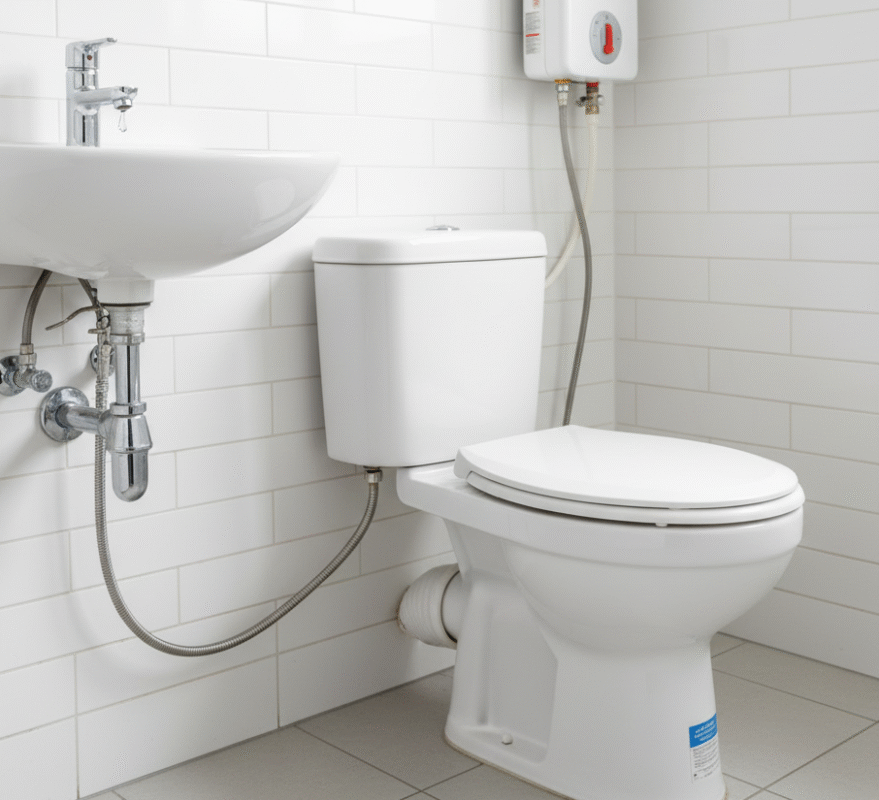
- Traps and Seals: All basins, sinks, showers, and baths must have P-traps or S-traps (where appropriate) maintaining a working water seal to block sewer gases.
- Fixture Functionality: The inspector will visually check for leaks at supply points (taps, shower mixers, toilet connections) and ensure smooth drainage.
- Water Conservation: There is an increasing focus on fixtures that promote water conservation, such as dual-flush toilets and efficient taps, aligning with global and national sustainability goals.
3rd Phase: The Final Sign-Off – Crossing the Finish Line
Once all systems are installed and successfully tested, the final Nairobi Plumbing Inspection leads to official sign-off.
The Final Inspection
The inspector will conduct a comprehensive check of all visible and accessible plumbing elements. They will verify that all previously noted defects (if any) have been rectified and that the entire system is fully operational and compliant.
The Plumber’s Certificate
Crucially, your licensed plumber will be required to submit a Plumber’s Certificate of Compliance to the County. This document formally attests that the plumbing work has been carried out in accordance with approved plans and all relevant bylaws and standards. This certificate is a vital component for obtaining the overarching Occupation Certificate for your property.
What Happens if You Fail?
If the inspector finds non-compliance issues:
- Defect Notice: You will receive a written notice detailing the specific defects.
- Rectification: You must rectify all issues within a specified timeframe.
- Re-inspection Fees: A re-inspection will be required, often incurring additional fees and delaying your project. This underscores the importance of thorough initial work and preparation.
Conclusion: Partnering for Compliance with Winstar Hardware
Navigating a Nairobi Plumbing Inspection doesn’t have to be a source of stress. By understanding the process, engaging licensed professionals, and using certified, high-quality materials, you can ensure a smooth path to compliance and secure that all-important sign-off.
At Winstar Hardware, we understand the stringent requirements of Kenyan construction. We are committed to supplying only KEBS-approved (Kenya Bureau of Standards) and internationally certified plumbing products, from durable PPR pipes and fittings to efficient PVC drainage solutions, water heaters, and reliable fixtures.
Our knowledgeable team can guide you in selecting materials that not only meet but exceed the expectations of any Nairobi Plumbing Inspection. Don’t compromise on quality or compliance – visit Winstar Hardware today and build with confidence. Your property’s safety and long-term value depend on it.