


Building a reliable home in Kenya requires careful planning for your water supply and waste removal. Choosing the right foundation to rooftop plumbing materials prevents costly leaks and structural damage later. Moreover, sourcing certified pipes and fittings guarantees clean water and smooth drainage for decades.
Planning Your Foundation to Rooftop Plumbing Layout in Kenya
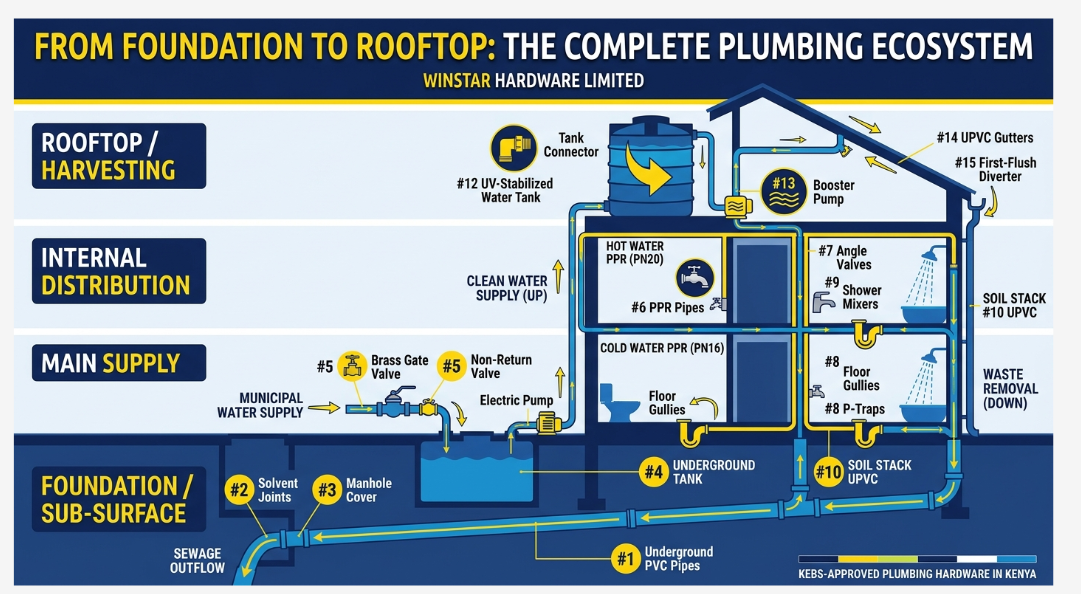
Every successful construction project begins with an accurate hydraulic blueprint before excavation starts. Specifically, engineers must map out every pipe run to balance water pressure and gravity drainage across the entire property. Furthermore, working with trusted suppliers ensures you acquire genuine materials that withstand local soil and weather conditions.
Assessing Water Pressure and Building Height
- Analyze municipal pressure: First, evaluate water flow rates from local providers like Nairobi Water to determine whether your house needs an underground storage tank.
- Calculate vertical head: Next, measure the exact height from the ground floor to the roof slab so your booster pump delivers adequate pressure to upper showers.
- Integrate borehole lines: Additionally, design separate intake valves if you plan to blend borehole water with county council water.
- Prevent pressure drops: Consequently, you should use wider main supply pipes at the base and gradually reduce diameters on upper floors.
- Account for surge protection: Finally, include pressure-reducing valves in your plan to protect delicate fixtures from sudden municipal water spikes.
Choosing KEBS-Approved Plumbing Hardware Brands
- Verify standardization marks: Always inspect pipes and fittings for the official Kenya Bureau of Standards (KEBS) diamond mark before paying.
- Avoid counterfeit materials: Unfortunately, substandard plastics crack easily under ground pressure and release harmful chemicals into drinking water.
- Check wall thickness: Therefore, compare the gauge markings printed along the pipe body against national engineering specifications.
- Source from reputable dealers: For instance, established distributors like Winstar Hardware Limited stock certified pipes from verified regional and international manufacturers.
- Request manufacturer warranties: Similarly, retain purchase receipts and warranty certificates for high-value items like booster pumps and water tanks.
Before finalizing your rough-in layout, it helps to choose the right pipes for your Kenyan home by comparing the long-term durability of PPR, PVC, and HDPE.
Sub-Surface & Foundation Drainage Supplies
Underground drainage forms the hidden backbone of any residential or commercial building in Kenya. Because these components sit beneath concrete slabs and compacted soil, repairing them later requires destructive demolition. As a result, installing heavy-duty foundation to rooftop plumbing drainage hardware during the substructure phase is mandatory.
#1. Heavy-Duty Underground PVC Drainage Pipes
- Select high-crush resistance: Choose thick-walled PVC pipes engineered to bear the heavy weight of backfill soil and foundation concrete.
- Maintain proper slope: Install underground waste lines at a consistent gradient so gravity carries solid waste smoothly toward the septic tank or main sewer.
- Separate greywater and blackwater: Route kitchen and bathroom sink runoff separately from toilet waste lines until they meet at the main inspection chamber.
- Use long-radius bends: Avoid sharp 90-degree elbows underground because they trap debris and cause frequent blockages.
Selecting the Right Gauge for Foundation to Rooftop Plumbing
- Choose Class D for driveways: Install Class D heavy-duty pipes beneath parking areas where vehicles exert high downward force.
- Use Class B for garden runs: Reserve standard Class B pipes for landscaped areas with zero vehicular traffic.
- Verify UV stability: Ensure any exposed pipe ends leading out of the foundation trench have UV protection before wall construction begins.
#2. Inspection Chambers and Manhole Covers
- Position at pipe junctions: Install brick or prefabricated plastic inspection chambers wherever two underground drain lines merge or change direction.
- Simplify future maintenance: Consequently, plumbers can clear blockages easily using drain rods without digging up your compound.
- Match cover load ratings: Place heavy-duty ductile cast iron covers on driveways and lighter composite covers in pedestrian walkways.
- Seal against odors: Ensure covers sit flush inside greased frames so foul sewer gases never escape into your yard.
#3. Solvent Cements and Rubber Ring Seals
- Create permanent chemical welds: Apply high-strength PVC solvent cement to clean, dry pipe ends to fuse joints into a single leak-proof unit.
- Allow thermal expansion: Alternatively, use push-fit pipes with EPDM rubber ring seals on long straight runs to accommodate ground movement.
- Prime joints properly: Always wipe away dust and moisture with a clean cloth before applying adhesives in dusty construction sites.
- Test before backfilling: Finally, plug the lowest outlet and fill the underground network with water to check every joint for leaks.
To visualize how underground drainage lines and risers are properly sized and assembled from scratch, you can watch this helpful How To Plumb A House! Ultimate Guide! video.
Main Water Supply & Underground Piping
Delivering clean water from the boundary meter to your house demands tough, flexible piping materials. Shifting black cotton soil, common in areas like Athi River, Kitengela, and parts of Nairobi, puts immense stress on rigid underground pipes. Therefore, modern foundation to rooftop plumbing relies on flexible polymers and corrosion-resistant brass valves for main supply lines.
#4. HDPE Pipes and Compression Fittings
- Resist ground movement: High-Density Polyethylene (HDPE) pipes flex naturally without snapping when surrounding clay soils expand and contract during rainy seasons.
- Eliminate underground joints: Because HDPE comes in long coils, you can run a single continuous pipe from the meter straight to your underground tank.
- Install mechanical compression fittings: Connect HDPE segments quickly using blue-nut polypropylene compression fittings that require zero heat or glue.
- Protect against sharp stones: Lay a bed of fine river sand beneath and above the pipe trench to prevent sharp rocks from puncturing the wall.
#5. Brass Gate Valves and Non-Return Valves
- Control main water entry: Install a heavy-duty brass gate valve immediately after the water meter so you can isolate the entire compound during repairs.
- Prevent reverse water flow: Fit a spring-loaded brass non-return valve to stop your stored tank water from flowing back into the empty county council main.
- Choose dezincification-resistant brass: Select high-grade brass alloys that resist corrosion from mineral-rich borehole water.
- Build valve chambers: House underground valves inside small concrete boxes with accessible lids so soil never buries the handles.
Controlling Flow in Foundation to Rooftop Plumbing Systems
- Install isolation points: Place brass ball valves at the base of every rising main to simplify zone-by-zone maintenance.
- Use strainers before valves: Fit Y-strainers ahead of check valves to catch sand particles that could jam the internal spring mechanism.
- Label valve functions: Attach waterproof metal tags to each main valve so homeowners know which lever shuts off specific zones.
4. Wall-Chasing & Internal Water Distribution Hardware
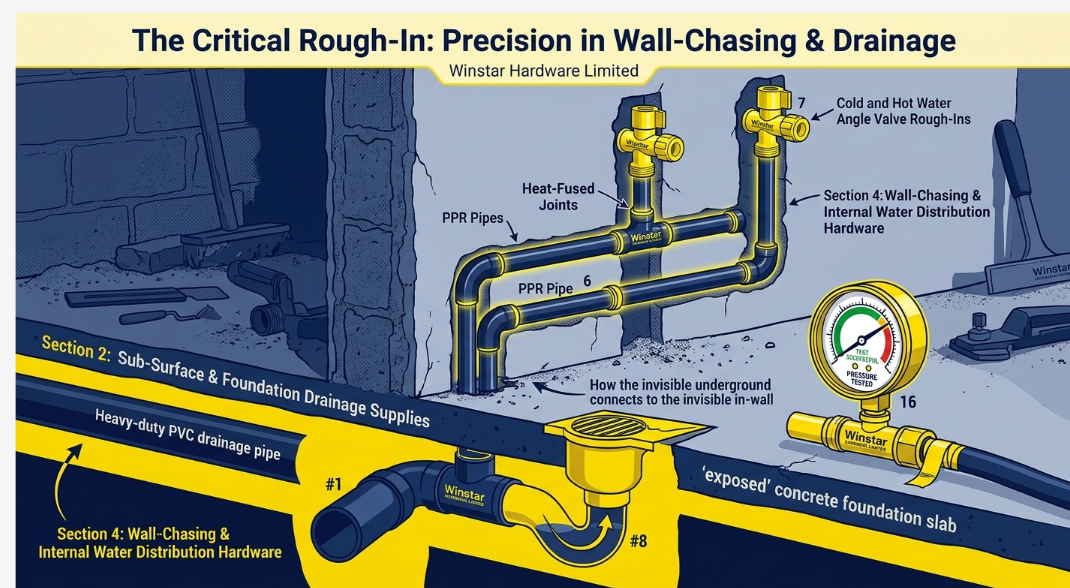
Once the masonry walls go up, plumbers chase channels into the stone to conceal internal water supply lines. Concealed piping keeps bathrooms and kitchens looking sleek, yet any hidden leak will ruin expensive paintwork and gypsum ceilings. Thus, selecting fusion-welded foundation to rooftop plumbing components is essential for interior distribution.
#6. PPR Pipes and Fusion Fittings
- Fuse pipes permanently: Polypropylene Random Copolymer (PPR) pipes melt together using a specialized heating machine, creating seamless joints stronger than the pipe itself.
- Prevent scale buildup: The smooth interior bore of PPR resists lime and mineral deposits, keeping water pressure strong for decades.
- Reduce noise transmission: Unlike metallic galvanized iron pipes, PPR absorbs water hammer vibrations and keeps walls quiet when taps close abruptly.
- Insulate hot water lines: Slip foam insulation sleeves over hot water PPR pipes to minimize heat loss between the solar heater and the shower.
Hot vs. Cold Water PPR Ratings for Foundation to Rooftop Plumbing
- Use PN16 for cold supply: Standard PN16 green pipes safely handle normal cold domestic water pressure throughout the house.
- Select PN20 for hot lines: Thicker-walled PN20 pipes with a red stripe withstand high temperatures from solar water heaters and instant showers without warping.
- Match fittings carefully: Always pair PN20 pipes with heavy-duty PN20 elbows and tees to maintain uniform pressure ratings.
#7. Concealed Stopcocks and Angle Valves
- Isolate individual rooms: Install concealed stopcocks inside every bathroom wall so you can fix a dripping tap without shutting off water to the kitchen.
- Choose ceramic disc cartridges: Modern quarter-turn ceramic valves open smoothly and never wear out like old rubber washer taps.
- Fit chrome angle valves: Connect toilet cisterns, sink mixers, and water heaters using braided flexible hoses attached to sleek wall-mounted angle valves.
- Align cover plates flush: Ensure plumbers set concealed valve bodies at the exact depth required to sit level with finished wall tiles.
Bathroom & Kitchen Rough-In Fixtures
Rough-in hardware connects your visible sanitary ware to the hidden drainage and supply network inside the walls and floors. Even the most expensive ceramic toilet or rain shower will fail if the behind-the-wall rough-in fittings are poorly aligned. Consequently, meticulous installation of foundation to rooftop plumbing rough-in items guarantees hygiene and comfort.
#8. P-Traps, Bottle Traps, and Floor Gullies
- Block foul sewer odors: P-traps and bottle traps hold a permanent water seal that stops methane and sewer smells from entering your rooms.
- Choose easy-clean bottle traps: Install chrome or heavy plastic bottle traps under washbasins so homeowners can unscrew the bottom cup to retrieve dropped rings or hair.
- Install stainless steel floor drains: Fit anti-cockroach floor gullies with removable hair strainers in shower cubicles and utility areas.
- Slope bathroom tiles correctly: Ensure masons grade the bathroom floor toward the gully so water drains rapidly without pooling.
#9. Concealed Cistern Frames and Shower Mixers
- Save bathroom floor space: Heavy-duty steel concealed cistern frames support wall-hung toilets while hiding the flushing tank inside the masonry wall.
- Verify load capacity: Ensure the metal frame is rated to hold up to 400 kilograms when bolted securely to the floor slab and wall.
- Install brass concealed shower mixers: Embed thermostatic or single-lever brass mixer bodies inside the shower wall before plastering begins.
- Consult knowledgeable suppliers: When selecting compatible rough-in kits, builders frequently consult Winstar Hardware Limited to match concealed valves with exterior trim plates.
Vertical Risers & Multi-Storey Foundation to Rooftop Plumbing
Multi-storey homes and apartment blocks in Kenya require engineered vertical piping to move water up to roof tanks and carry waste down safely. High static pressure at the bottom of tall risers and suction forces inside soil stacks can damage standard pipes. Therefore, specialized foundation to rooftop plumbing vertical risers are vital for multi-level buildings.
#10. UPVC Pressure Pipes and Pipe Clamps
- Support high vertical columns: Heavy-gauge Class E UPVC pressure pipes safely handle the intense water weight pushing down from elevated rooftop tanks.
- Anchor risers securely: Fasten vertical pipes to exterior walls every 1.5 meters using rubber-lined steel pipe clamps to stop wind vibration and sagging.
- Include expansion sockets: Leave slight thermal expansion gaps inside vertical couplings because Kenyan sun heats exterior walls during the afternoon.
- Paint exposed pipes: Apply a coat of UV-resistant exterior acrylic paint over outdoor UPVC pipes to prevent sun brittleness over time.
#11. Air Admittance Valves and Vent Pipes
- Equalize drain pressure: Extend main soil stacks above the roofline with open cowls so air enters the pipe whenever a toilet flushes.
- Protect trap water seals: Without proper venting, rushing wastewater creates a vacuum that sucks water out of sink traps and lets sewer gas inside.
- Use air admittance valves: Where extending a vent pipe through the roof is impractical, install mechanical air admittance valves inside ceiling voids.
- Fit bird screens: Cover rooftop vent pipe openings with wire mesh cowls to stop birds from nesting inside drainage stacks.
Balancing Pressure in Foundation to Rooftop Plumbing Stacks
- Size vent stacks properly: Keep main ventilation risers at least half the diameter of the primary soil discharge pipe.
- Install offset bends carefully: Use 45-degree angles rather than sharp horizontal turns when routing vent pipes around roof eaves.
- Check local council codes: Ensure your vertical soil and vent layout complies with county public health building regulations.
Rooftop Water Storage & Pumping Systems
In many Kenyan towns, rationing makes rooftop water storage indispensable for uninterrupted daily living. Placing storage tanks on a reinforced concrete roof slab or steel tower provides natural gravity pressure to every tap below. However, a reliable foundation to rooftop plumbing rooftop setup requires UV-resistant tanks and smart automated controls.
#12. UV-Stabilized Plastic Water Tanks and Tank Connectors
- Choose multi-layer tanks: Select black or dark-colored UV-stabilized polyethylene tanks that block sunlight and stop green algae from growing inside your drinking water.
- Install brass tank connectors: Replace flimsy plastic bulkheads with heavy-duty brass tank connectors fitted with thick rubber washers to prevent base leaks.
- Provide flat support bases: Place tanks on a completely flat, debris-free concrete platform so uneven stress does not crack the tank bottom.
- Size overflow pipes generously: Fit an overflow pipe wider than the inlet pipe so excess water drains safely onto the roof scupper if a float valve fails.
For a practical demonstration on mounting bulkheads, leveling bases, and connecting overflow lines securely, check out this Complete Guide to Water Tank Installation
#13. Booster Pumps and Automatic Float Switches
- Lift water to the roof: Install a centrifugal or peripheral surface pump at ground level to push water from your underground sump up to the rooftop tank.
- Boost top-floor showers: Additionally, fit a compact silent booster pump on the roof outlet if top-floor bathrooms lack sufficient gravity pressure.
- Automate pump operation: Wire dual automatic float switches between the underground and rooftop tanks to control water levels hands-free.
- Prevent dry-running damage: Ensure the lower tank float switch cuts power immediately when ground water runs low so the pump motor never burns out.
Automating Foundation to Rooftop Plumbing Water Supply
- Install a pump control panel: Protect expensive pump motors from Kenya Power voltage fluctuations using an automated relay box with surge protection.
- Fit flexible anti-vibration hoses: Connect pump inlets and outlets using braided stainless steel hoses to stop noise from traveling into the house structure.
- Add bypass lines: Plumb a non-return valve bypass around your roof booster pump so gravity still feeds your taps during power outages.
8. Roof Drainage & Rainwater Harvesting Hardware
Kenya experiences intense seasonal downpours during the long and short rains, dumping thousands of liters of water onto residential roofs. Without proper roof drainage, overflowing water erodes foundations, stains exterior walls, and floods compounds. Moreover, capturing this runoff turns your foundation to rooftop plumbing network into a sustainable rainwater harvesting system.
#14. UPVC Gutters, Downpipes, and Fascia Brackets
- Capture heavy rainfall: Install deep-flow half-round or square UPVC gutters along all roof eaves to catch rapid runoff during tropical storms.
- Space fascia brackets closely: Mount heavy-duty gutter brackets every 60 centimeters so the weight of surging rainwater never bends the channel.
- Slope gutters toward outlets: Angle gutter runs slightly toward the corner drop outlets so standing water never breeds mosquitoes.
- Secure vertical downpipes: Clip downpipes tightly to wall corners and direct discharge into storm drains or harvesting tanks.
#15. First-Flush Diverters and Leaf Guards
- Keep tank water clean: Install mesh leaf guards over gutter channels and downpipe inlets to block twigs, leaves, and debris.
- Divert initial roof dirt: Fit a vertical first-flush diverter pipe that traps the first dusty, bird-dropping-laden rainwater before clean water enters your storage tank.
- Include slow-release drip caps: Ensure your first-flush chamber drains automatically after each storm so it resets for the next rainfall.
- Install tank inlet strainers: Place a fine stainless-steel basket filter at the top tank entry point for final sediment removal.
Final Testing, Maintenance & Foundation to Rooftop Plumbing Checklist
Before masons plaster over wall chases or lay expensive floor tiles, every single joint in the building must undergo rigorous verification. Skipping pressure tests is the leading cause of damp walls and peeling paint in newly built Kenyan homes. Therefore, completing a thorough foundation to rooftop plumbing inspection protects your investment before handover.
#16. Pressure Testing Gauges and Thread Sealants
- Conduct hydrostatic pressure tests: Cap all open pipe outlets, fill the internal PPR network with water, and pump the line to 1.5 times normal working pressure.
- Monitor the pressure gauge: Leave the testing gauge attached for at least 24 hours; any drop on the dial reveals a hidden pinhole leak inside the wall.
- Seal threaded joints properly: Wrap high-density PTFE thread seal tape or hemp with jointing paste around all brass male threads to stop slow weeping.
- Inspect drainage flow: Pour buckets of water down every floor gully, sink, and toilet outlet to confirm rapid drainage and tight seals.
Sourcing Your Complete Hardware List in Kenya
- Consolidate your bill of quantities: Buying your entire piping, valve, and sanitary ware schedule from one supplier unlocks significant bulk discounts.
- Verify stock availability: Partnering with a comprehensive distributor like Winstar Hardware Limited prevents project delays caused by missing fittings or mismatched pipe sizes.
- Keep spare fittings on site: Purchase extra elbows, sockets, and adhesive so your plumber never improvises with incompatible parts during final fixes.
To maximize your property’s sustainability during dry spells, you can conserve water in Kenya with rainwater harvesting by integrating first-flush diverters into your rooftop setup.
Conclusion
Executing a successful build requires patience, skilled workmanship, and certified materials at every stage of construction. Master your Kenyan build with our foundation to rooftop plumbing guide. Explore 16 vital hardware supplies for lasting water systems. By prioritizing KEBS-approved pipes, brass valves, and thorough pressure testing today, you guarantee a dry, hygienic, and trouble-free home for generations.