

Choosing the right plumbing infrastructure determines whether your building thrives or suffers costly structural damage. Consequently, Kenyan property buyers and developers must evaluate durable drainage and sewerage system solutions before breaking ground or renovating. Poor waste management triggers foul odors, foundation cracks, and hefty municipal fines across growing towns. Furthermore, investing in high-grade materials saves you thousands of shillings in emergency repairs.
1. Understanding Kenya’s Infrastructure and Drainage and Sewerage System Solutions
Rapid urban expansion in Nairobi, Mombasa, and Kisumu puts immense pressure on existing public utility lines. Therefore, property buyers must evaluate local terrain and municipal capacity before purchasing plumbing supplies. Modern drainage and sewerage system solutions bridge the gap where county sewer lines fall short.
Common Wastewater Challenges in Urban and Peri-Urban Kenya
- First, heavy downpours routinely overwhelm undersized county storm drains across residential estates.
- Consequently, surface water backs up into compounds and erodes building foundations quickly.
- Additionally, rapid apartment construction strains aging municipal sewer networks in high-density suburbs.
- Thus, commercial buyers must compare independent waste containment systems against unreliable county connections.
- Meanwhile, Winstar Hardware Limited stocks heavy-duty components engineered specifically for these demanding local conditions.
#1. Managing Flash Floods During Heavy Rainy Seasons
- Specifically, intense March-to-May rains generate massive runoff across paved urban compounds.
- Therefore, properties without dedicated perimeter channels experience severe waterlogging and wall dampness.
- Furthermore, installing high-capacity catch basins directs excess water safely away from structural footings.
#2. Overcoming Aging Municipal Sewer Networks
- Unfortunately, older county trunk lines frequently suffer from collapses and tree-root intrusions.
- As a result, raw sewage often overflows onto access roads during peak usage hours.
- Instead, forward-thinking developers install isolated holding systems to protect tenants from public line failures.
Evaluating Property-Specific Drainage and Sewerage System Solutions
- Primarily, every plot presents unique geological and topographical constraints that dictate equipment choices.
- For instance, black cotton soil in Syokimau and Kitengela expands drastically when wet.
- Conversely, rocky terrain in Karen or Limuru requires specialized trenching and flexible piping joints.
- Therefore, consulting technical suppliers ensures you match your drainage and sewerage system solutions to your exact soil profile.
#3. Assessing Soil Percolation and Water Tables Before Building
- Initially, conducting a simple percolation test reveals how fast your ground absorbs wastewater.
- Otherwise, high water tables in coastal or lakeside towns cause standard soak pits to flood rapidly.
- Consequently, buyers in waterlogged zones should prioritize sealed above-ground or shallow-trench treatment units.
2. Modern Piping Materials for Residential and Commercial Projects
Selecting inferior pipes leads to underground leaks, ground subsidence, and expensive floor demolition. Fortunately, modern thermoplastics outperform traditional concrete and cast-iron conduits in both lifespan and cost-efficiency. Buyers evaluating drainage and sewerage system solutions should compare pipe wall thickness, joint integrity, and chemical resistance.
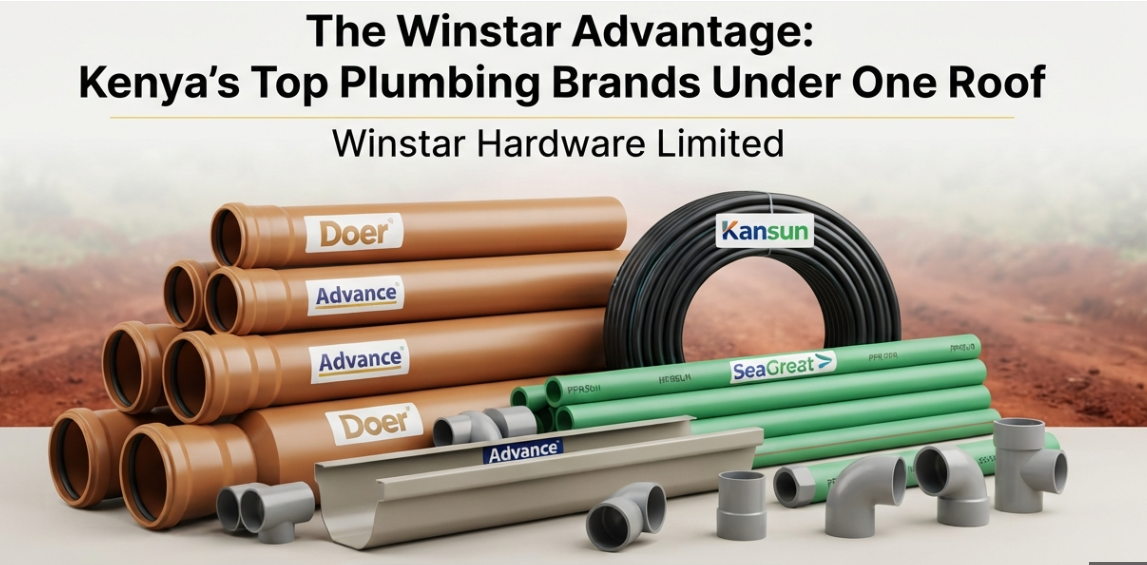
Choosing Durable Pipes for Long-Term Drainage and Sewerage System Solutions
- Notably, virgin polymer pipes resist corrosion from harsh household detergents and acidic soil.
- Moreover, smooth interior walls minimize friction and prevent solid waste from snagging inside lines.
- Furthermore, rubber-ring push-fit joints accommodate minor ground shifts without cracking or leaking.
- Similarly, sourcing certified pipes from Winstar Hardware Limited guarantees compliance with strict structural load ratings.
- In addition, lightweight thermoplastic pipes reduce transport expenses and speed up on-site installation timelines.
#4. Heavy-Duty uPVC Pipes for Underground Foul Water Lines
- Specifically, unplasticized polyvinyl chloride (uPVC) remains the industry standard for gravity-fed sewer lines.
- Additionally, Class B and Class D golden-brown uPVC pipes withstand heavy vehicular traffic above driveways.
- Therefore, commercial developers choose uPVC for main soil stacks and underground waste discharge networks.
#5. HDPE Pipes for High-Pressure and Flexible Terrain Installations
- Meanwhile, high-density polyethylene (HDPE) excels in uneven terrain where rigid pipes might snap.
- Furthermore, butt-fusion welding creates seamless, leak-proof joints that block aggressive tree roots completely.
- Consequently, engineers specify HDPE for pumped sewage mains and unstable black cotton soils.
Sizing and Gradient Standards Under Kenyan Building Codes
- Crucially, buying the right pipe diameter prevents chronic slow drains and solid blockages.
- Generally, residential toilet waste lines require a minimum diameter of 110mm for smooth flow.
- Meanwhile, main collector lines serving apartment blocks demand 160mm to 200mm heavy-duty conduits.
- Therefore, matching pipe sizing to occupancy levels optimizes your drainage and sewerage system solutions from day one.
Furthermore, reviewing what to expect during a Nairobi plumbing inspection helps you prepare for slope checks and water tests before trenches get covered.
#6. Calculating Proper Pipe Slopes to Prevent Sediment Buildup
- Ideally, horizontal waste pipes require a steady downward gradient of 1:40 to 1:60.
- Otherwise, overly flat pipes allow solid waste to settle and harden inside the line.
- Conversely, excessively steep slopes cause water to outrun solids, leaving dry debris behind.
3. Off-Grid and On-Site Drainage and Sewerage System Solutions
Millions of Kenyan plots sit miles away from county trunk sewers, making on-site waste treatment mandatory. Consequently, developers must weigh upfront installation costs against long-term emptying expenses when choosing containment units. Investing in self-sustaining drainage and sewerage system solutions boosts property resale value and eliminates recurring exhauster fees.
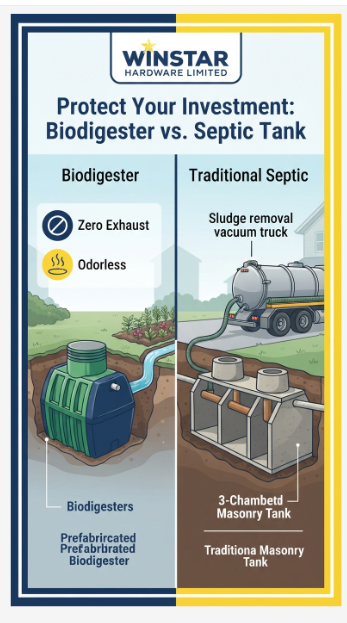
Septic Tanks vs. Biodigesters for Kenyan Homes
- Traditionally, masonry septic tanks required massive excavation and periodic vacuum truck pumping.
- However, modern precast biodigesters break down organic waste naturally using anaerobic bacteria.
- Furthermore, biodigesters occupy minimal yard space, leaving more room for parking or gardens.
- Thus, urban homeowners increasingly prefer compact biological units over bulky underground concrete chambers.
- Moreover, reliable drainage and sewerage system solutions incorporate secondary filtration to ensure odorless effluent discharge.
#7. Installing Zero-Exhaust Biodigesters for Small Plot Sizes
- Specifically, biodigesters convert solid sewage into clear, odorless water within 24 to 48 hours.
- Consequently, property owners save up to KES 15,000 per trip on recurring exhauster services.
- Additionally, rapid two-day installation makes biodigesters ideal for tight 50×100 residential plots.
#8. Designing Multi-Chamber Septic Tanks and Soak Pits
- Alternatively, large commercial estates often utilize three-chamber masonry septic tanks for high-volume loads.
- Specifically, baffle walls separate floating scum from heavy sludge while allowing clarified water to exit.
- Thereafter, a properly sized soak pit disperses the treated liquid safely into permeable subsoil layers.
Integrating Greywater Recycling into Drainage and Sewerage System Solutions
- Notably, shower, sink, and laundry water accounts for over 60% of household wastewater volume.
- Therefore, separating greywater from blackwater reduces the hydraulic load on your primary septic system.
- Furthermore, treated greywater provides a reliable, free water source during dry Kenyan months.
- Consequently, dual-plumbing setups represent smart drainage and sewerage system solutions for eco-conscious buyers.
#9. Reusing Treated Shower and Laundry Water for Landscaping
- First, simple sand-and-gravel filtration beds remove soap residues and lint from household greywater.
- Subsequently, subsurface drip lines distribute this nutrient-rich water directly to lawns and perimeter hedges.
- As a result, property owners cut municipal water bills significantly while keeping compounds green.
4. Stormwater Management and Surface Runoff Control
Uncontrolled rainwater destroys driveways, erodes landscaped slopes, and floods ground-floor apartments within minutes. Therefore, savvy buyers integrate surface water control directly into their broader drainage and sewerage system solutions. Proper runoff management channels torrential rain safely off your plot without upsetting neighboring properties.
Protecting Foundations from Rainwater Damage
- Primarily, standing water around perimeter walls weakens mortar joints and triggers rising damp.
- Moreover, saturated foundations settle unevenly, causing unsightly diagonal cracks across interior plaster.
- Consequently, installing subsurface perimeter drains protects your structural investment for decades.
- Additionally, durable grating covers prevent leaves and plastic litter from clogging open yard channels.
- Therefore, proactive stormwater planning remains vital for high-value drainage and sewerage system solutions across Kenya.
#10. Installing French Drains Around Waterlogged Compounds
- Specifically, a French drain consists of a perforated pipe wrapped in geotextile fabric inside a gravel trench.
- Consequently, the trench intercepts subsurface groundwater and redirects it toward a safe discharge point.
- Furthermore, geotextile wrapping stops fine silt from clogging the pipe perforations over time.
#11. Utilizing Permeable Paving for Driveways and Parking Lots
- Unlike solid concrete slabs, interlocking permeable pavers allow rainwater to seep into the ground below.
- As a result, surface puddles disappear rapidly while naturally recharging local underground aquifers.
- Additionally, permeable parking lots help commercial developers meet county stormwater retention regulations.
Roof Gutters and Downspout Catchment Systems
- Crucially, a standard residential roof collects thousands of liters of water during a single storm.
- Without proper gutters, cascading roof water digs deep trenches right next to your foundation walls.
- Instead, heavy-duty UV-stabilized PVC gutters capture runoff cleanly and channel it into downspouts.
- Thus, integrated roof catchment forms an essential part of complete drainage and sewerage system solutions.
#12. Directing Roof Runoff into Underground Harvesting Tanks
- First, leaf-eater screens on downspouts filter out twigs and debris before water enters storage.
- Next, first-flush diverters discard initial dirty roof washings to keep stored water clean.
- Finally, underground cisterns store thousands of liters for flushing toilets and washing vehicles.
5. Grease Traps, Chambers, and Filtration Components
Even the strongest pipes will fail quickly without proper access points and waste-separation accessories. Consequently, commercial kitchens, hotels, and multi-unit apartments require specialized interception hardware. Sourcing complete drainage and sewerage system solutions ensures every joint, valve, and chamber works together seamlessly.
Essential Accessories for Drainage and Sewerage System Solutions
- Notably, fats, oils, and grease solidify inside cold underground pipes, creating rock-hard blockages.
- Therefore, intercepting kitchen waste before it enters main sewer lines prevents costly emergency unblocking.
- Furthermore, strategically placed access chambers let plumbers clear minor clogs without digging up paving.
- Meanwhile, Winstar Hardware Limited supplies corrosion-resistant chambers and heavy-duty covers for residential and industrial builds.
- Ultimately, these vital accessories extend the operational lifespan of your entire plumbing network.
#13. Fitting Grease Traps in Commercial and Residential Kitchens
- Specifically, under-sink or underground grease traps cool kitchen wastewater so fats float to the top.
- Meanwhile, clean water exits from the bottom baffle directly into the main drain line.
- Consequently, restaurants and apartments avoid foul odors and municipal trade-effluent penalties.
#14. Positioning Inspection Chambers and Manholes for Easy Access
- Primarily, building codes require inspection chambers at every pipe bend, junction, or gradient change.
- Additionally, heavy-duty ductile iron or composite manhole covers support vehicle weights on driveways.
- Thus, technicians can inspect and rod entire pipe runs effortlessly from ground level.
Preventing Backflow and Foul Odors
- Occasionally, overwhelmed street sewers push contaminated water backward into ground-floor bathrooms and kitchens.
- Moreover, dry floor traps allow toxic methane and hydrogen sulfide gases to enter living spaces.
- Therefore, installing mechanical barriers safeguards indoor air quality and protects ground-floor interiors.
- Indeed, these protective valves distinguish premium drainage and sewerage system solutions from basic installations.
#15. Installing Non-Return Valves to Stop Sewer Backups
- Specifically, a non-return flap valve allows wastewater to flow out freely under normal conditions.
- However, if downstream pressure surges during a flood, the internal flap snaps shut immediately.
- Consequently, raw sewage cannot back up into ground-floor toilets, showers, or floor drains.
6. Smart Technology in Drainage and Sewerage System Solutions
Modern plumbing has evolved far beyond passive gravity pipes and manual guesswork. Today, automated pumps and digital inspection tools give Kenyan property owners unprecedented control over waste systems. Integrating smart drainage and sewerage system solutions prevents catastrophic basement flooding and lowers long-term maintenance costs.
Modern Diagnostics and Automated Wastewater Controls
- Previously, locating a collapsed underground pipe required breaking up entire driveways blindly.
- Now, fiber-optic diagnostic equipment pinpoints structural defects to the exact centimeter within minutes.
- Furthermore, automated pumping stations lift wastewater effortlessly from basement levels up to street sewers.
- Therefore, commercial landlords gain peace of mind knowing automated sensors monitor fluid levels 24/7.
- Clearly, technology-driven drainage and sewerage system solutions deliver superior reliability for modern multi-story developments.
#16. Using CCTV Drain Cameras for Accurate Blockage Detection
- Specifically, waterproof high-definition cameras travel deep inside pipes to record live video footage.
- Consequently, engineers identify root intrusions, misaligned joints, or grease buildup without destructive digging.
- Moreover, pre-purchase CCTV inspections protect property buyers from inheriting hidden underground plumbing defects.
#17. Automating Basement Sump Pumps with Float Switches
- Whenever underground parking levels sit below municipal sewer lines, gravity drainage becomes impossible.
- Therefore, submersible grinder pumps macerate solids and pump wastewater upward into main discharge lines.
- Meanwhile, automatic float switches activate the pumps instantly whenever sump pit water reaches preset levels.
Water-Saving Sanitary Fittings
- Interestingly, reducing indoor water consumption directly eases the workload on your waste disposal system.
- For instance, dual-flush cisterns and low-flow aerators cut daily wastewater generation by up to 35%.
- Consequently, smaller septic tanks and soak pits handle household output without overflowing.
- Thus, efficient fixtures complement your underground drainage and sewerage system solutions while lowering monthly utility bills.
7. Routine Maintenance and Blockage Prevention Strategies
Even the highest-grade plumbing installation requires periodic care to perform at peak efficiency. Neglecting minor slow drains inevitably escalates into burst pipes, sewage overflows, and structural water damage. Following structured maintenance protocols protects your drainage and sewerage system solutions for decades.
Proactive Care for Drainage and Sewerage System Solutions
- Primarily, scheduled preventive cleaning costs a fraction of emergency weekend plumbing callouts.
- Moreover, training tenants and household staff on proper waste disposal prevents 80% of common clogs.
- Specifically, non-biodegradable wipes, cooking oil, and sanitary products should never enter toilets or sinks.
- Furthermore, pairing good habits with biological treatments keeps underground pipes spotless year-round.
- Ultimately, disciplined upkeep maximizes the return on your drainage and sewerage system solutions investment.
#18. Scheduling Annual High-Pressure Hydro-Jetting
- Specifically, hydro-jetting blasts pressurized water at up to 4,000 PSI through interior pipe walls.
- Unlike mechanical snakes that merely poke holes through clogs, water jets scour away hardened grease completely.
- Consequently, annual jetting restores pipes to their original full-flow diameter without damaging PVC walls.
#19. Using Eco-Friendly Bio-Enzymatic Cleaners Instead of Harsh Acids
- Unfortunately, caustic chemical drain openers generate intense heat that warps plastic pipes and weakens rubber seals.
- Furthermore, harsh acids kill the beneficial bacteria inside biodigesters and septic tanks immediately.
- Instead, bio-enzymatic cleaners digest organic hair, soap scum, and grease safely without harming plumbing hardware.
Early Warning Signs of System Failure
- Often, underground plumbing systems exhibit subtle symptoms weeks before a complete blockage occurs.
- For example, gurgling sounds in sinks when flushing a toilet indicate trapped air from partial clogs.
- Similarly, unusually lush, green patches of grass over a septic field signal leaking underground effluent.
- Therefore, addressing these warning signs promptly saves your drainage and sewerage system solutions from major failure.
8. Budgeting, Compliance, and Hiring Licensed Kenyan Plumbers
Cutting corners on regulatory approvals or unqualified labor often results in stop-work orders and expensive rework. Therefore, property buyers must align their procurement budget with national construction codes and licensed artisans. Careful financial planning ensures your drainage and sewerage system solutions pass county inspections smoothly.
Navigating NCA Standards and NEMA Environmental Approvals
- Primarily, the National Construction Authority (NCA) mandates strict adherence to building drainage codes.
- Additionally, commercial developments and biodigester installations require Environmental Impact Assessment (EIA) clearance from NEMA.
- Furthermore, county public health officers inspect sewer connections before issuing final occupation certificates.
- Consequently, budgeting early for statutory permits prevents frustrating project delays at handover.
Selecting Qualified Contractors and Genuine Hardware Suppliers
- Unfortunately, counterfeit thin-walled pipes flood informal markets, tempting buyers with deceptively low prices.
- However, sub-standard plastics crack under soil pressure within months of backfilling trenches.
- Therefore, always partner with reputable hardware distributors and NCA-accredited plumbing contractors.
- Finally, transparent material comparisons empower you to choose drainage and sewerage system solutions that balance cost and durability.
#20. Verifying KEBS Certification and Requesting Itemized BOQs
- First, inspect every pipe and fitting for the official Kenya Bureau of Standards (KEBS) Diamond Mark of Quality.
- Second, request a detailed Bill of Quantities (BOQ) separating pipe classes, fittings, and labor rates clearly.
- Consequently, itemized quotes let you compare supplier pricing accurately and eliminate hidden construction markups.
Conclusion
Protecting your real estate investment begins beneath the surface with smart engineering and certified plumbing materials. Explore reliable drainage and sewerage system solutions in Kenya. Prevent flooding, blockages, and costly repairs with our 20 tips. Contact a certified plumbing supplier today to review your architectural drawings and secure an itemized quote for your project.